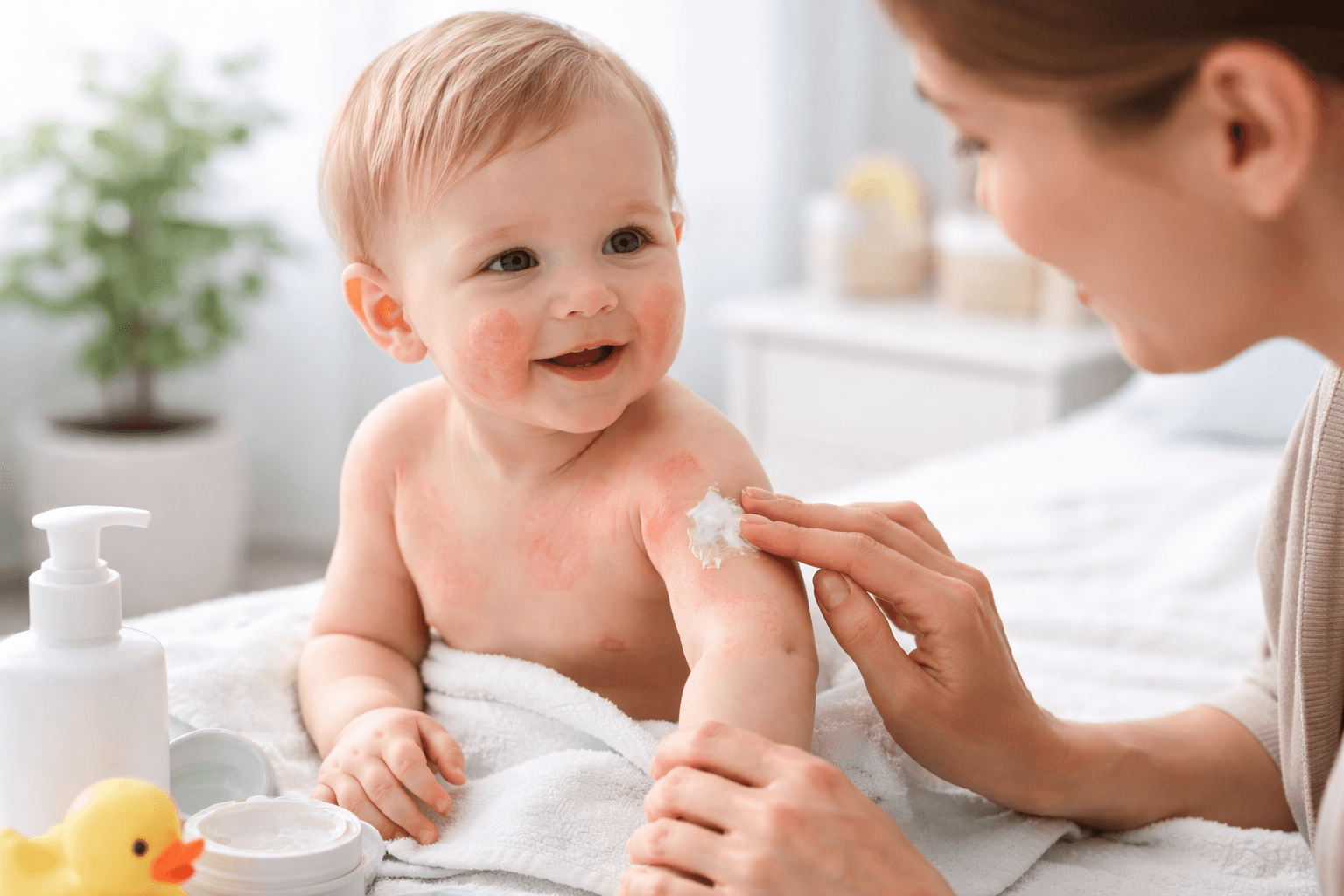
How I Managed My Baby's Eczema Symptoms
Caring for a baby with eczema can feel overwhelming, particularly when symptoms seem to come and go without a clear explanation. It is a condition that many parents face, and understanding what may be happening beneath the surface can help make day-to-day management a little easier to navigate. This article provides a general overview of baby eczema, the factors that may contribute to flare-ups, and the role that identifying possible triggers may play in supporting long-term symptom management.
Understanding Baby Eczema (Atopic Dermatitis)
Baby eczema, also known as atopic dermatitis, is one of the most common inflammatory skin conditions seen in infants and young children. It typically appears within the first few months of life and may affect different areas of the body, including the cheeks, scalp, arms, and legs. The condition is characterised by patches of dry, red, and irritated skin. Babies may scratch or rub affected areas due to itching, which can sometimes lead to further skin damage and discomfort. Eczema is not contagious and is not caused by poor hygiene. At its core, atopic dermatitis is linked to a reduced skin barrier function. In healthy skin, the outer layer acts as a protective shield, retaining moisture and keeping irritants out. In babies with eczema, this barrier is compromised, allowing moisture to escape more easily and making the skin more vulnerable to environmental irritants and allergens. This increased sensitivity is a key reason why symptoms can be difficult to control with moisturising alone.
Why Baby Eczema Can Be Difficult to Manage
One of the most frustrating aspects of baby eczema for parents is its unpredictability. Symptoms may fluctuate from week to week, with periods of relative calm followed by unexpected flare-ups. Some infants may respond well to a regular moisturising routine, while others may continue to experience persistent irritation despite consistent care. The variable nature of eczema means that what works for one baby may not work for another. A product that seems to help during one flare-up may appear less effective during the next. This does not necessarily mean the skincare routine is wrong — it may suggest that other factors are contributing to the cycle of inflammation. Understanding that eczema is a long-term inflammatory condition, rather than a simple skin dryness issue, can help parents approach management with more realistic expectations.
Common Factors That May Trigger Eczema Flare-Ups
Eczema flare-ups can be influenced by a range of environmental and lifestyle factors. While triggers vary between individuals, the following are among the most commonly reported:
- Detergents and fragranced products
- Dust mites
- Pollen
- Pet dander
- Certain foods
- Heat and excessive sweating
- Rough or synthetic fabric materials Not all of these will apply to every baby, and identifying specific triggers often takes time. Keeping a symptom diary may help parents and healthcare professionals identify patterns over time.
The Role of Daily Skin Care in Managing Symptoms
A consistent daily skincare routine is widely regarded as the foundation of eczema management in infants. Emollients, or medical moisturisers, help to restore and maintain the skin barrier by trapping moisture in the skin. They are typically applied several times a day, including after bathing. When bathing a baby with eczema, lukewarm water is generally recommended. Prolonged or hot baths may strip the skin of its natural oils, potentially worsening dryness. Soap-free cleansers or emollient wash products are often preferred over standard soaps or bubble baths. In some cases, a GP may recommend additional treatments, such as mild topical corticosteroids, to help manage inflammation during more active flare-ups. These treatments should always be used under medical guidance and are not intended for long-term continuous use without review.
Why Symptoms May Continue Despite Following a Skin Care Routine
Some parents find that even with a dedicated and consistent skincare routine, their baby's eczema symptoms persist. This can be disheartening, but it is not uncommon. Babies may continue to experience recurrent itching, persistent dryness, and night-time irritation even when moisturising is carried out regularly. There are several possible reasons for this. Environmental exposure may play a role. For example, a baby who is sensitive to house dust mites may experience ongoing symptoms if their sleeping environment contains high levels of allergens. Similarly, seasonal changes in pollen levels may influence skin condition in some infants. There may also be an underlying sensitivity that has not yet been identified. Allergen-triggered inflammation can contribute to a cycle of flare-ups that does not respond fully to topical skincare alone. In such cases, addressing the underlying trigger alongside the skincare routine may offer a more complete approach to management.
Can Allergies Play a Role in Baby Eczema?
There is a well-recognised association between atopic dermatitis and allergic conditions. Research suggests that some infants with eczema may also have food sensitivities or environmental allergen exposure that contribute to their symptoms. It is important to note that not all babies with eczema have allergies, and not all allergies will cause eczema. However, in some cases, exposure to certain allergens may contribute to recurrent flare-ups and persistent inflammation. This is particularly relevant when eczema does not respond as expected to standard skincare measures. The relationship between eczema and allergic sensitisation is complex. Sensitisation — the presence of specific IgE antibodies to a particular substance — does not always equate to a clinical allergy. However, when sensitisation is present alongside consistent symptoms, it may warrant further clinical consideration.
Signs Your Baby's Eczema May Be Trigger-Related
While eczema symptoms can fluctuate for many reasons, certain patterns may suggest that specific triggers are involved. Parents may wish to discuss the following observations with their GP or healthcare provider:
- Recurrent flare-ups that follow a similar pattern
Symptoms that worsen in certain environments, such as specific rooms or locations
Seasonal changes in severity, such as worsening during spring or autumn
- Persistent itching that does not respond to emollient therapy alone
Flare-ups occurring after exposure to certain foods or substances, with no other identifiable cause These signs do not confirm an allergy, but they may indicate that further assessment could be helpful in understanding the condition more fully.
Why Identifying Possible Triggers Matters
Understanding the potential triggers behind a baby's eczema can be a valuable part of long-term management planning. When specific triggers are identified, parents and healthcare professionals may be able to take steps to reduce exposure, which in turn may support better symptom control over time. Trigger identification is not about finding a single cause or expecting a complete resolution. Eczema is a multifactorial condition, and symptoms are often influenced by a combination of factors. However, having a clearer picture of what may be contributing to flare-ups allows for a more targeted and informed approach to care. For some families, this may mean making adjustments to the home environment, such as reducing dust mite exposure or reconsidering certain dietary introductions under medical guidance.
How Allergy Blood Testing May Help Identify Potential Triggers
For parents who are exploring whether allergen exposure may be contributing to their baby's eczema, allergy blood testing is one clinical assessment option that may be considered. A nurse-led allergy blood test involves taking a small venous blood sample, which is then analysed by an accredited laboratory to assess sensitivity to specific allergens. This type of testing, known as specific IgE testing , can measure the presence of IgE antibodies to a range of substances, including dust mites, pollen, pet dander, and certain food allergens. It is important to understand that allergy blood testing does not diagnose eczema or confirm a specific cause. Rather, it provides information about sensitisation patterns that may be clinically relevant when considered alongside a baby's symptoms and medical history. Results should be discussed with a qualified healthcare professional for appropriate interpretation. A nurse-led allergy testing service in London offers a convenient and accessible way for parents to gather additional clinical information as part of their child's care planning.
When to Consider a Clinical Allergy Assessment
Not every baby with eczema requires allergy testing. However, a clinical allergy assessment may be worth considering if:
- Symptoms persist despite following a consistent skincare routine
- Flare-ups are recurrent and follow a recognisable pattern
- There is a poor response to GP-recommended topical treatments
Parents or healthcare professionals suspect that an allergen may be involved A clinical allergy assessment is not a replacement for ongoing GP care. It is an additional step that may provide further insight for families who feel that standard approaches have not fully addressed their baby's symptoms.
Summary: Managing Baby Eczema Symptoms
Baby eczema is a common and often challenging condition for families. There is currently no permanent cure for atopic dermatitis, but symptoms may improve with appropriate management and often become less severe as children grow older. A consistent skincare routine, including regular emollient use and careful bathing practices, remains the cornerstone of daily management. However, when symptoms persist or flare-ups appear to follow specific patterns, exploring whether allergen exposure may be a contributing factor can be a helpful step. Identifying possible triggers through methods such as specific IgE allergy blood testing may support a more informed and targeted approach to care planning. Any testing or assessment should complement, not replace, the guidance of a GP or specialist. Every baby is different, and what works for one family may not be right for another. Patience, observation, and open communication with healthcare providers are among the most important tools available to parents navigating this condition.
Book a Nurse-Led Allergy Blood Test in London
If you are considering whether allergy blood testing may be a helpful next step in understanding your baby's eczema symptoms, you can view available test options and book an appointment through the clinic's online booking system.