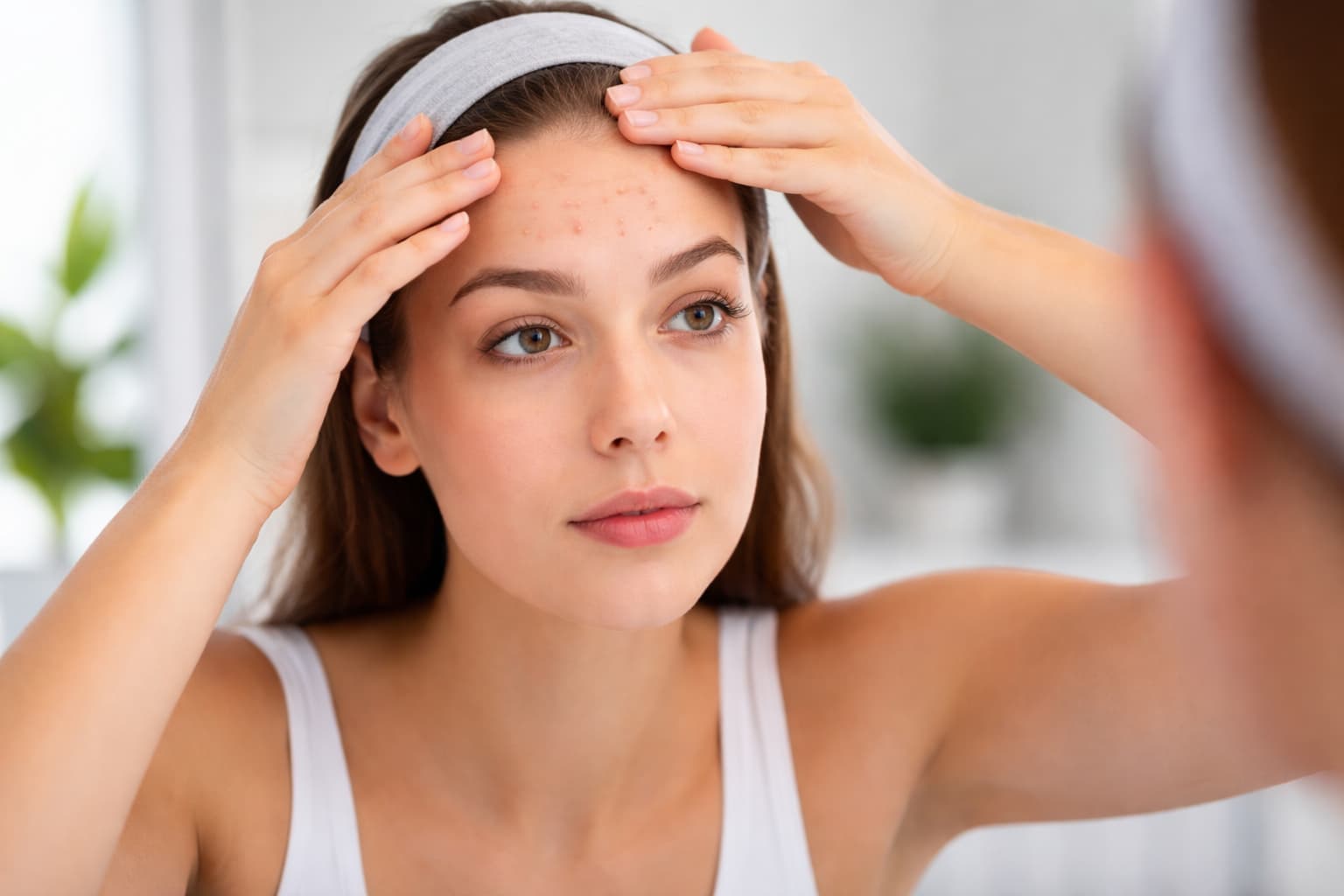
How to Get Rid of Breakouts on Your Forehead: Causes and Practical Steps
Quick Answer To help reduce breakouts on your forehead, use a gentle cleanser twice daily, introduce one active ingredient at a time (such as salicylic acid), keep hair products away from the hairline, and avoid over-exfoliating. Most forehead breakouts relate to excess oil, friction or product build-up. Improvement typically takes several weeks of consistent care. Forehead breakouts are one of the most common skin concerns, affecting people of all ages and skin types. Whether they appear as small bumps along the hairline, scattered spots across the forehead, or deeper, more inflamed blemishes, they can be both frustrating and persistent. It is worth understanding that not all forehead breakouts are the same. What looks like acne may sometimes be a different type of skin reaction entirely. Identifying the likely cause is an important first step toward choosing the right approach to care. It is also important to set realistic expectations. Skin takes time to respond to changes in routine, and meaningful improvement is rarely immediate. A consistent, patient approach tends to yield better results than frequent switching between products.
Why the Forehead Is Prone to Breakouts
The forehead sits within what is commonly referred to as the T-zone — the area spanning the forehead, nose and chin. This region has a higher concentration of sebaceous (oil-producing) glands than other parts of the face, which makes it more susceptible to congestion and breakouts.
The T-Zone and Oil Production
Sebaceous glands produce sebum, a natural oil that helps protect and moisturise the skin. On the forehead, these glands tend to be larger and more active, particularly during adolescence and in those with naturally oily skin. When excess sebum combines with dead skin cells, it can block pores and create an environment in which spots are more likely to develop.
Sweat, Friction and Occlusion
Physical factors can also contribute to forehead breakouts. Wearing hats, helmets, headbands or caps for extended periods creates a warm, humid environment against the skin. This occlusion traps sweat and oil, increasing the likelihood of blocked pores. Similarly, frequent touching of the forehead or resting it against surfaces can introduce bacteria and irritate the skin. Post-exercise breakouts are particularly common on the forehead because sweat mixes with oil and sits against the skin, especially beneath a fringe or headband.
Hair Products and Hairline Irritation
Hairline breakouts are a widely reported concern and are often linked to hair styling products. Pomades, waxes, gels, conditioners and dry shampoos can migrate onto the forehead, blocking pores and irritating the skin. This pattern is sometimes referred to as "pomade acne" and tends to cluster along the hairline where product residue accumulates.
Skincare Overuse and Barrier Damage
While good skincare habits are important, overdoing it can be counterproductive. Over-exfoliation, harsh foaming cleansers, and layering too many active products can strip the skin of its natural moisture barrier. When the barrier is compromised, the skin may respond by producing even more oil, leading to a cycle of congestion and irritation.
Hormonal Influence
Hormonal fluctuations play a well-documented role in breakout patterns. During adolescence, increased androgen activity stimulates the sebaceous glands, often resulting in oilier skin and more frequent spots. In adults, hormonal shifts related to the menstrual cycle, pregnancy or stress can also trigger breakouts, though these tend to affect the lower face and jawline more than the forehead.
Are All Forehead Breakouts Acne?
Not necessarily. While acne is the most common cause of forehead spots, several other skin conditions can produce a similar appearance. Understanding the differences can help guide appropriate next steps, though it is important to note that a definitive assessment should come from a qualified healthcare professional.
Typical Acne (Comedones and Inflamed Spots)
Acne on the forehead usually presents as blackheads (open comedones), whiteheads (closed comedones) or inflamed red spots. These develop when pores become blocked with sebum and dead skin cells. In some cases, bacteria contribute to inflammation, leading to pustules or deeper, more painful lesions.
Contact Dermatitis
Contact dermatitis is a skin reaction triggered by direct contact with an irritant or allergen. On the forehead, this may be caused by skincare products, cosmetics, hair dyes or fragranced hair products. It typically presents as a red, irritated and sometimes itchy rash rather than the classic comedonal spots seen in acne. The pattern often corresponds to where the triggering substance has been applied.
Heat Rash or Sweat-Related Irritation
Heat rash (miliaria) can occur on the forehead when sweat becomes trapped beneath the skin, particularly in warm or humid conditions. It typically appears as clusters of small, slightly raised bumps and may feel prickly or itchy. This is distinct from acne and usually resolves once the skin cools and perspiration can escape normally.
Folliculitis (Bacterial or Yeast-Related)
Folliculitis involves inflammation of the hair follicles and can sometimes be mistaken for acne. It may be caused by bacterial or yeast (fungal) overgrowth and often presents as uniform, small bumps that may be itchy rather than painful. Confirmation of folliculitis typically requires assessment by a healthcare professional, as the treatment approach differs from that for standard acne.
Can Allergies Cause Breakouts on the Forehead?
This is a question that comes up frequently, and it is important to address it with care. Acne vulgaris — the most common form of acne — is not typically caused by allergies. It is primarily driven by excess sebum production, follicular blockage, bacterial activity and inflammation. However, allergic skin reactions can sometimes mimic the appearance of breakouts. Allergic contact dermatitis, for example, may produce redness, small bumps and irritation on the forehead if the skin has come into contact with a substance that triggers an immune response. Common culprits include certain fragrances, preservatives in skincare products, hair dye chemicals and nickel (from accessories worn on the head). The key distinction is that acne involves pore blockage and bacterial activity within the follicle, whereas an allergic reaction involves an immune-mediated response to a specific trigger. The two can look similar on the surface but have different underlying mechanisms. If you experience persistent or unexplained skin flare-ups that do not respond to standard skincare approaches, it may be worth discussing your symptoms with a healthcare professional. In some cases, further assessment may help clarify whether an allergic component is contributing to the picture. It is worth noting that allergy blood testing identifies IgE-mediated sensitivities. It does not diagnose acne, but in cases where allergic triggers are suspected, it may provide additional information that can be discussed with your GP or dermatologist.
Common Mistakes That Make Forehead Breakouts Worse
When dealing with persistent spots, it is natural to want to take aggressive action. However, some of the most common responses can actually worsen the problem. -**Over-washing:**Cleansing more than twice a day can strip the skin barrier, prompting increased oil production and further congestion. -**Harsh scrubs:**Physical exfoliants with rough particles can cause micro-tears in the skin, leading to irritation and inflammation that makes breakouts appear worse. -**Mixing too many active ingredients:**Layering multiple actives such as retinoids, acids and benzoyl peroxide simultaneously can overwhelm the skin, causing dryness, peeling and reactive breakouts. -**Picking or squeezing:**This introduces bacteria, increases inflammation and significantly raises the risk of scarring and post-inflammatory pigmentation. -**Heavy hair products:**Styling products that are oil-based or contain silicones can migrate onto the forehead and hairline, blocking pores. -**Ignoring scalp health:**A flaky, oily or irritated scalp can contribute to hairline breakouts. Keeping the scalp clean and well-maintained helps reduce this risk.
A Simple, Skin-Friendly Routine for Forehead Breakouts
A consistent, straightforward routine is often more effective than a complicated multi-step regimen. The following suggestions are general in nature and are not intended to replace personalised advice from a healthcare professional.
Gentle Cleansing
Choose a mild, non-foaming or low-foaming cleanser that removes excess oil and impurities without stripping the skin. "Gentle" in this context means a formulation with a balanced pH (close to the skin's natural pH of around 5.5) that does not leave the skin feeling tight or dry after use. Cleansing twice daily — morning and evening — is generally sufficient.
Introduce One Active Ingredient at a Time
If you are looking to incorporate an active ingredient, it is advisable to introduce only one at a time so that you can monitor how your skin responds. Commonly available options include: -**Salicylic acid:**A beta-hydroxy acid that can help to unclog pores. It is available in many over-the-counter cleansers and leave-on products. -**Benzoyl peroxide:**Has antibacterial properties and is widely used for spot-prone skin. It can cause dryness and irritation, particularly when first introduced, so starting with a lower concentration may be sensible. -**Azelaic acid:**Can help to reduce redness and mild congestion. It is generally well tolerated and suitable for sensitive skin types. These ingredients are available over the counter in the UK. If you are unsure which is appropriate for your skin, a pharmacist can offer guidance.
Moisturising Matters (Even for Oily Skin)
Skipping moisturiser is a common mistake for those with oily or spot-prone skin. A lightweight, oil-free or non-comedogenic moisturiser helps to maintain the skin barrier without adding excess oil. When the skin is adequately hydrated, it is less likely to overproduce sebum as a compensatory response.
Daily Sun Protection
Sunscreen is an important step regardless of skin type. Some active ingredients used for breakouts can increase the skin's sensitivity to ultraviolet light. A broad-spectrum SPF of at least 30, in a non-comedogenic formulation, is a sensible daily addition.
Hairline Hygiene Adjustments
If your breakouts cluster around the hairline, consider adjusting your hair care routine. Rinse conditioner thoroughly so that residue does not sit on the forehead. Pin back a fringe while sleeping or exercising. Be mindful of how and where you apply styling products, and consider switching to lighter, water-based formulations.
How Long Does It Take to See Improvement?
One of the most important things to understand about managing breakouts is that the skin renews itself on a cycle of roughly four to six weeks. This means that changes made today may not produce visible results for several weeks. As a general guide, some early changes may become noticeable within two to four weeks of starting a consistent routine. More meaningful improvement often takes six to eight weeks. It is not unusual for skin to go through a brief adjustment period when introducing a new active ingredient, during which breakouts may temporarily appear slightly worse before they begin to settle. Patience and consistency are important. Frequently changing products or routines does not give any single approach enough time to take effect.
When to Seek Professional Advice
While many forehead breakouts can be managed with over-the-counter products and good skincare habits, there are circumstances in which it is advisable to seek professional guidance.
- No improvement after several weeks of a consistent, appropriate routine
- Painful cystic spots that sit deep beneath the skin
- Scarring or persistent post-inflammatory marks
- Severe redness, swelling or signs of infection
- Breakouts that are significantly affecting your confidence or mental wellbeing A pharmacist can advise on over-the-counter options. For persistent or more severe acne, a GP or dermatologist can offer a broader range of assessment and management options. If your skin symptoms suggest a possible allergic component — for instance, if you notice a pattern of flare-ups after contact with specific products or materials — discussing this with your healthcare provider may be worthwhile. If skin flare-ups appear linked to possible allergic triggers, laboratory allergy testing may help identify IgE-mediated sensitivities. It does not diagnose acne but may provide clarity in certain cases.
Frequently Asked Questions
Why do I only get breakouts on my forehead?
The forehead is part of the T-zone, which has a higher density of oil-producing glands than other areas of the face. This makes it more susceptible to pore blockage. Hairline products, fringes and hats can also contribute to forehead-specific breakouts by trapping oil and sweat against the skin.
Can shampoo cause forehead acne?
It is possible. Shampoos and conditioners that contain heavy oils, silicones or fragrances can leave residue along the hairline. If this residue is not thoroughly rinsed away, it may block pores and contribute to breakouts. Rinsing hair products away from the face and ensuring the forehead is cleansed after washing hair may help.
Are forehead breakouts hormonal?
Hormonal fluctuations can influence breakout patterns, though hormonal acne more commonly affects the lower face and jawline. The forehead is more often associated with oil production, product build-up and environmental factors. That said, hormonal changes during adolescence, menstruation and periods of stress can contribute to increased oiliness across the entire face, including the forehead.
Can stress cause spots?
There is evidence to suggest that stress can influence skin health. Stress triggers the release of cortisol, which may increase sebum production and contribute to breakouts. While stress alone is unlikely to be the sole cause, it can be an aggravating factor alongside other triggers.
Is fungal acne real?
The term "fungal acne" is commonly used but is not a precise medical term. The condition it usually refers to is pityrosporum folliculitis, an overgrowth of yeast within hair follicles. It can produce small, uniform, sometimes itchy bumps that resemble acne but require a different approach to management. If you suspect this may be the cause of your breakouts, a healthcare professional can help with assessment.
Can allergies cause forehead breakouts?
Acne itself is not typically caused by allergies. However, allergic contact dermatitis — a reaction to a substance that touches the skin — can produce redness, bumps and irritation on the forehead that may resemble breakouts. If you notice a pattern of skin flare-ups linked to specific products, materials or exposures, it may be worth discussing with your GP.
Should I exfoliate small bumps?
Gentle chemical exfoliation (such as a product containing salicylic acid) may help to address mild congestion. However, aggressive physical scrubbing can worsen inflammation and damage the skin barrier. If small bumps persist despite gentle care, consider seeking advice from a pharmacist or GP.
How do I stop hairline acne?
Hairline breakouts are often linked to hair product residue. Switching to lighter, water-based styling products, rinsing conditioner thoroughly, cleansing the hairline as part of your face-washing routine and pinning back a fringe during exercise or sleep can all help reduce the likelihood of hairline congestion.
When should I worry about forehead breakouts?
Most forehead breakouts are a normal and manageable skin concern. However, if you experience painful cystic lesions, signs of infection (such as spreading redness, warmth or pus), scarring, or if breakouts are significantly affecting your quality of life, it is advisable to seek assessment from a GP or dermatologist. This article is for general information only and does not replace personalised medical advice. If you experience persistent, severe or worsening skin symptoms, seek advice from a qualified healthcare professional.