How to Get Rid of Dust Mites in Your Home
Dust mites are one of the most common indoor allergen sources in the UK, yet they are invisible to the naked eye. For many people, they cause no noticeable problems at all. For others — particularly those who have developed an immune sensitivity to dust mite proteins — they can be associated with persistent respiratory symptoms that are often mistaken for a lingering cold or sinus trouble. This article explains what dust mites are, where they tend to live, and what practical steps may help reduce their presence in the home. It also explores why environmental cleaning alone may not fully resolve symptoms in some individuals, and when further clinical assessment may be worth considering.
What Are Dust Mites?
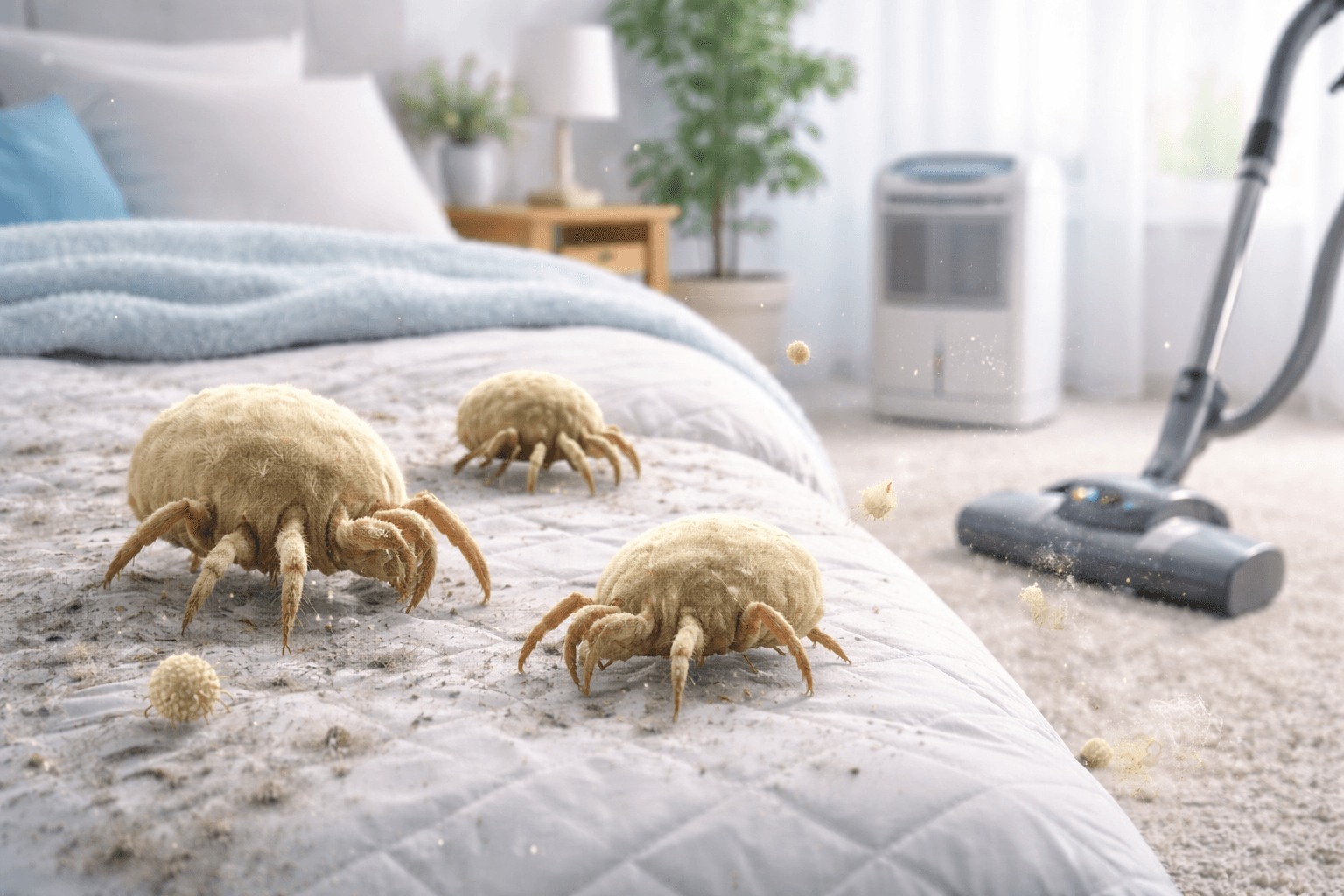
Dust mites are microscopic organisms that belong to the arachnid family. They are too small to see without magnification, typically measuring around 0.2 to 0.3 millimetres in length. They feed primarily on shed human skin cells, which accumulate naturally in household dust. Dust mites thrive in warm, humid environments and are commonly found in bedding, mattresses, pillows, carpets, curtains, and upholstered furniture. They do not bite, sting, or carry disease. The health concern associated with dust mites relates not to the mites themselves, but to proteins found in their waste particles and body fragments. When these proteins become airborne or are disturbed, they can be inhaled or come into contact with the skin and mucous membranes, potentially triggering an allergic response in sensitised individuals.
Why Dust Mites Can Affect Your Health
In individuals whose immune system has developed a sensitivity to dust mite proteins, exposure may lead to an inflammatory response in the nasal passages, eyes, and airways. This type of reaction is part of the body's allergic response and involves the release of histamine and other inflammatory chemicals. Symptoms associated with dust mite allergy may include:
- Frequent sneezing
- Persistent nasal congestion or a blocked nose
- Itchy, watery, or red eyes
- Post-nasal drip
- Facial pressure, particularly around the sinuses
- A persistent cough, especially at night or in the morning These symptoms can closely resemble those of a common cold, a sinus infection, or chronic rhinitis. Because of this overlap, dust mite allergy can go unrecognised for a considerable period, with symptoms attributed to other causes. The key distinguishing feature is often the persistent or recurring nature of the symptoms, particularly when they worsen in indoor environments or during the night.
Is It Possible to Completely Get Rid of Dust Mites?
Complete elimination of dust mites from an indoor environment is rarely achievable. Even in well-maintained and regularly cleaned homes, detectable levels of dust mite allergen may still be present. Dust mites reproduce quickly and are found in virtually all inhabited buildings, regardless of cleanliness. The goal of environmental control measures is not to eradicate dust mites entirely, but rather to reduce the overall allergen load within the home. By lowering the concentration of dust mite proteins in the living environment, it may be possible to reduce the frequency or intensity of symptoms in some individuals. However, the degree of benefit varies from person to person and depends on the level of sensitisation involved.
Where Dust Mites Commonly Live in the Home
Dust mites tend to concentrate in areas where human skin cells accumulate and where conditions are warm and humid. Understanding where they are most commonly found can help guide efforts to reduce exposure. The bedroom is typically the highest-risk area, largely because of the amount of time spent in bed and the close, prolonged contact with bedding and mattresses. Pillows, duvets, and mattresses provide an ideal habitat due to the combination of warmth, moisture from perspiration, and a steady supply of shed skin cells. Beyond the bedroom, dust mites may also be found in carpets, rugs, fabric-covered sofas and armchairs, curtains, and soft toys. Any soft furnishing that traps dust and is not regularly washed at high temperatures may harbour dust mite populations.
Practical Ways to Reduce Dust Mite Levels
While complete removal is not realistic, a number of practical measures may help lower dust mite levels and reduce allergen exposure within the home:
Wash bedding — including sheets, pillowcases, and duvet covers — weekly at a temperature of 60°C or above to kill dust mites
Use allergen-resistant encasement covers on mattresses, pillows, and duvets to create a barrier between the sleeper and accumulated allergens
Maintain indoor humidity below 50 per cent, as dust mites require moisture to survive and reproduce; a dehumidifier may help in damp areas
Improve ventilation throughout the home by opening windows where practical, to help reduce humidity and improve air circulation
Damp-dust hard surfaces regularly rather than dry dusting, which can disperse allergen particles into the air
Vacuum carpets and upholstered furniture using a vacuum cleaner with a HEPA filter, which is designed to trap fine particles
Consider replacing carpets with hard flooring in bedrooms where possible, as hard surfaces are easier to keep free of accumulated dust
Wash soft toys regularly at high temperatures, or place them in a freezer bag overnight to kill mites before washing These measures are generally straightforward and may be implemented gradually. They are aimed at reducing the overall burden of dust mite allergen in the home rather than achieving elimination.
Why Reducing Dust Mites May Not Fully Relieve Symptoms
For some individuals, environmental control measures bring noticeable improvement. However, others may find that symptoms persist even after making significant changes to the home environment. This can be frustrating, but there are clinical reasons why this may occur. In sensitised individuals, the immune system has developed a specific response to dust mite proteins. Once this sensitisation is established, even relatively low levels of allergen exposure may be sufficient to maintain an ongoing inflammatory response in the nasal passages and airways. This means that while reducing dust mite levels may lower the allergen load, it may not bring concentrations below the threshold needed to prevent symptoms entirely. Persistent nasal congestion, recurrent sneezing, and ongoing post-nasal drip in this context may represent allergic rhinitis — a chronic inflammatory condition of the nasal lining driven by allergic sensitisation. This is distinct from simple irritation caused by dust and may require a different approach to management than environmental cleaning alone.
Signs You May Have a Dust Mite Allergy
Certain patterns may suggest that symptoms are related to dust mite sensitisation rather than general dust exposure or recurrent infections. These are not diagnostic indicators, but they may be useful observations to discuss with a healthcare professional:
- Nasal congestion that is worse in the morning or after time spent in bed
- Recurrent sneezing upon waking or when making the bed
- Night-time symptoms such as a blocked nose, coughing, or disturbed sleep
- Itchy or watery eyes, particularly indoors
- Sinus pressure or facial heaviness that recurs without signs of infection
- Post-nasal drip that persists throughout the year Year-round symptoms — as opposed to those that follow a seasonal pattern — may be particularly suggestive, since dust mite exposure tends to be a perennial rather than seasonal allergen source in the UK.
Why Identifying the Underlying Trigger Matters
When respiratory symptoms persist without a clear explanation, understanding the underlying cause may help guide a more targeted and effective approach to management. Ongoing exposure to an allergen that has not been identified can sustain chronic inflammation in the nasal passages and airways, potentially contributing to disrupted sleep, daytime fatigue, reduced concentration, and a general impact on quality of life. In some cases, untreated allergic rhinitis may also increase the risk of secondary complications such as recurrent sinus infections or the worsening of co-existing conditions like asthma. Identifying the specific allergen or allergens involved allows management to be tailored accordingly, which may include a combination of environmental measures, medical treatment guided by a GP, and ongoing clinical review.
How Allergy Testing May Help
For individuals whose symptoms suggest a possible dust mite allergy, allergy testing may provide useful clinical information. Testing does not diagnose a condition on its own, but it can help determine whether the immune system has developed sensitisation to specific allergens, including house dust mite proteins. Specific IgE blood testing measures the levels of immunoglobulin E antibodies associated with particular allergens. Elevated levels suggest that the immune system has mounted a response to that substance. This type of test can assess sensitisation to a range of allergens beyond dust mites, including pollen, pet dander, and mould spores. In more complex presentations, molecular allergy diagnostics may offer additional detail by identifying sensitisation at the individual protein component level. This can help distinguish between primary sensitisation and cross-reactivity, which may be relevant when considering management options. It is important to understand that sensitisation does not always equate to clinical allergy. A positive result should be interpreted alongside symptoms and clinical history by a qualified healthcare professional.
When to Consider Specialist Assessment
Environmental control measures and general advice from a GP are appropriate starting points for most individuals with suspected dust mite allergy. However, further clinical assessment may be worth considering in certain circumstances:
Symptoms that persist despite consistent environmental cleaning and allergen reduction measures
Recurrent nasal congestion or sinus pressure lasting several weeks or more
- Night-time breathing difficulty or sleep disruption related to congestion
Symptoms that significantly affect daily activities, work, or wellbeing
A desire to understand whether specific allergen sensitisation is present A GP is the appropriate first point of contact. Depending on the clinical picture, a referral to a specialist may be considered, or individuals may choose to explore a respiratory allergy assessment independently as an additional clinical step.
Summary: Managing Dust Mite Exposure
Dust mites are a common and largely unavoidable feature of indoor environments. While complete elimination is not realistic, practical measures such as washing bedding at high temperatures, using allergen-resistant covers, reducing humidity, and regular cleaning may help lower the overall allergen load within the home. For individuals with persistent or recurrent respiratory symptoms, environmental control alone may not be sufficient. Ongoing symptoms such as nasal congestion, sneezing, and post-nasal drip may indicate underlying allergic sensitisation, which can sustain chronic inflammation even when dust mite levels have been reduced. Identifying whether dust mite allergy is present may support a more personalised and effective approach to management. Allergy testing, including specific IgE blood testing, is one clinical pathway that can help provide this information. Results should always be reviewed alongside symptoms and medical history by a qualified healthcare professional.
Book an Allergy Test
If you are experiencing persistent respiratory symptoms and would like to explore whether dust mite sensitisation may be a contributing factor, you can view available test options and book an appointment through the clinic's online booking system.