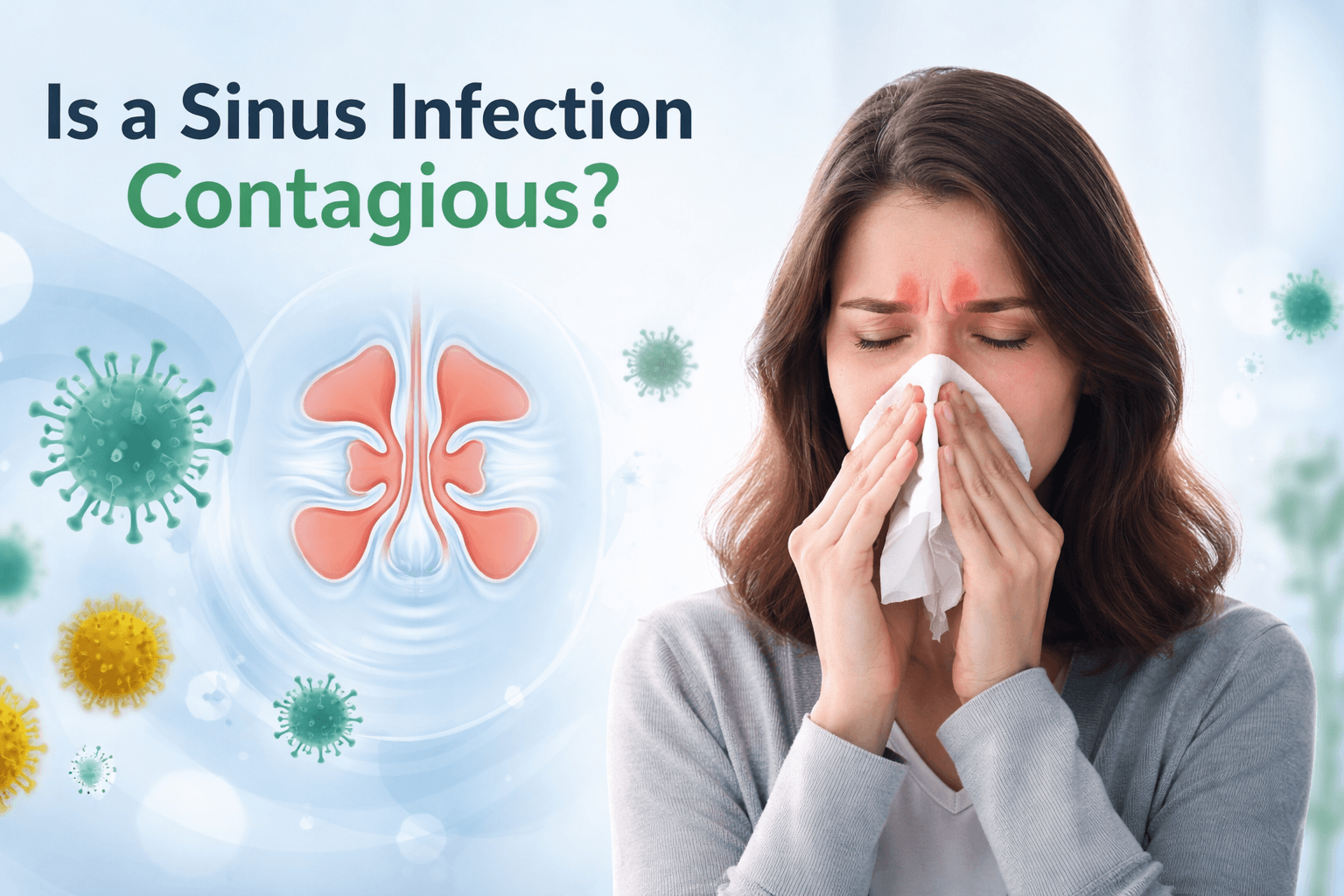
Is a Sinus Infection Contagious?
Sinus symptoms are extremely common, and when congestion, facial pressure, and thick nasal discharge develop, many people naturally wonder whether they might pass the condition on to others. The answer depends largely on what is causing the sinus inflammation in the first place. This article explains the different causes of sinusitis, clarifies which forms may involve a transmissible element, and explores why some individuals who experience recurrent sinus symptoms may benefit from considering whether an allergic component is involved.
What Is a Sinus Infection (Sinusitis)?
Sinusitis refers to inflammation of the mucous membrane lining the paranasal sinuses — the air-filled cavities located within the bones of the face and skull. There are four pairs of sinuses: the maxillary sinuses behind the cheeks, the frontal sinuses above the eyes, the ethmoid sinuses between the eyes, and the sphenoid sinuses deeper within the skull. When the sinus lining becomes inflamed, the narrow drainage pathways that connect the sinuses to the nasal cavity may become partially or fully blocked. This can lead to a build-up of mucus, creating the sensation of pressure, fullness, and pain that is characteristic of sinusitis. Sinus inflammation may be triggered by a range of factors. Viral respiratory infections are among the most common causes, but bacterial complications, allergic rhinitis, environmental irritants, and structural variations within the nasal passages may also contribute. The term "sinus infection" is widely used, but it is worth noting that not all sinusitis involves infection — in many cases, the inflammation is driven by non-infectious processes such as allergy. A respiratory allergy assessment may help clarify the underlying cause in individuals with recurrent symptoms.
Is Sinusitis Contagious?
Sinusitis itself is not usually contagious. The inflammation of the sinus lining is a localised response that cannot be transmitted from one person to another in the way that an infection can. However, there is an important distinction to make. When sinusitis develops as a result of a viral respiratory infection — such as the common cold or influenza — the underlying virus can spread between people through respiratory droplets and close contact. In this scenario, it is not the sinusitis that is contagious, but the viral infection that triggered it. The person who catches the virus may or may not go on to develop sinus inflammation, depending on their individual anatomy, immune response, and other factors. Bacterial sinus infections generally develop internally, typically as a secondary complication when impaired sinus drainage allows bacteria to multiply within the stagnant mucus. This type of sinusitis is not usually considered contagious. Allergy-related sinus inflammation cannot be transmitted to others. It is an immune response triggered by exposure to specific allergens and is entirely non-infectious.
Understanding the Different Causes of Sinus Inflammation
Because sinusitis can arise from different underlying causes, understanding which type is involved can help clarify questions about contagion, duration, and appropriate management.
Viral Sinusitis
Viral sinusitis is the most common form and typically develops following a common cold, influenza, or another upper respiratory tract infection. The virus causes inflammation and swelling of the nasal and sinus lining, which impairs normal mucus drainage and leads to the familiar symptoms of congestion, facial pressure, and thick nasal discharge. The virus responsible for the initial infection can spread to others through respiratory droplets produced by coughing or sneezing, and through close personal contact. This means that during the early stages of a viral illness, there is a risk of transmitting the infection to others. However, the sinusitis that may follow is a secondary consequence and is not directly transmitted. Viral sinusitis typically resolves within seven to ten days as the body clears the infection.
Bacterial Sinusitis
Bacterial sinusitis may develop when sinus drainage becomes blocked for a prolonged period, creating conditions that allow bacteria to grow. This often occurs as a complication of a viral infection or in the context of persistent nasal swelling from other causes. Symptoms of bacterial sinusitis may include worsening facial pain, discoloured nasal discharge, and a prolonged course of illness beyond ten days. A GP may consider antibiotic treatment if bacterial sinusitis is suspected, though many cases still resolve without antibiotics. Bacterial sinus infections are generally not transmitted from person to person. The bacteria involved are typically those already present in the nasal passages that proliferate when drainage is impaired.
Allergy-Related Sinus Inflammation
In individuals who are sensitised to specific environmental allergens, exposure may trigger an inflammatory response in the nasal passages and sinuses. Common triggers include house dust mites, grass and tree pollen, pet dander, mould spores, and certain environmental irritants. This type of sinus inflammation is non-infectious and non-contagious. It is driven by the immune system's response to allergens rather than by any pathogen. However, it can produce symptoms that are remarkably similar to those of an infectious sinusitis, including nasal congestion, facial pressure, post-nasal drip, and a reduced sense of smell. Allergy-related sinus inflammation is often recurrent, with symptoms returning upon re-exposure to the triggering allergen. For some individuals, this pattern occurs seasonally, while for others — particularly those sensitised to perennial allergens such as dust mites — symptoms may persist throughout the year. Allergy testing services , including specific IgE blood testing and molecular allergy diagnostics , may help identify the allergens involved.
Why Many "Sinus Infections" Are Not Infections at All
One of the most important and often overlooked aspects of recurrent sinus problems is that many episodes labelled as "sinus infections" may not involve infection in the traditional sense. Some patients who are diagnosed with repeated sinusitis may actually have allergic rhinosinusitis — a chronic or recurrent inflammatory condition of the nasal and sinus lining driven by allergic sensitisation. The symptoms of allergic rhinosinusitis can closely mirror those of an infectious sinusitis. Persistent nasal congestion, facial pressure, post-nasal drip, a reduced sense of smell, and ongoing nasal blockage are all common features. Without further investigation, it can be difficult to distinguish between the two, which is why allergic sinus inflammation may go unrecognised for years. This distinction matters because the management approach differs. While infectious sinusitis may respond to time, supportive care, or antibiotics where appropriate, allergy-related sinus inflammation is unlikely to resolve fully without addressing the underlying allergic component. Repeated courses of antibiotics for symptoms that are actually allergy-driven may be ineffective and unnecessary.
Viral vs Allergy-Driven Sinus Symptoms
Distinguishing between viral and allergy-driven sinus symptoms can be challenging, but certain features may help point toward one cause over the other. | Feature | Viral Infection | Allergy-Related | | | Fever | Sometimes | Rare | | | Seasonal recurrence | No | Yes | | | Sneezing | Occasional | Common | | | Itchy eyes | No | Common | | | Indoor symptom worsening | No | Yes | | | Duration beyond 10 days | Uncommon | Common | | These features are intended as general guidance rather than diagnostic criteria. A definitive distinction often requires clinical evaluation and, in some cases, further investigation.
Signs Your Sinus Symptoms May Be Allergy-Related
Certain patterns may suggest that sinus symptoms have an allergic component rather than being solely the result of recurrent infections. These observations may be useful when discussing symptoms with a healthcare professional:
- Symptoms lasting longer than ten days without signs of infection such as fever
Recurrent sinus congestion that follows a predictable seasonal or environmental pattern
Symptoms that worsen indoors, particularly in dusty environments or around pets
Associated sneezing, nasal itching, or watery eyes alongside congestion
Repeated episodes diagnosed as "sinus infections" that occur without discoloured discharge or fever
A personal or family history of allergic conditions such as eczema, asthma, or hay fever The presence of several of these features does not confirm an allergy, but it may indicate that further assessment of potential allergic sensitisation could be worthwhile.
Why Identifying the Underlying Trigger Matters
When sinus inflammation is driven by allergic sensitisation, ongoing exposure to the triggering allergen may sustain a chronic inflammatory state within the nasal passages and sinuses. Over time, this persistent inflammation can have several consequences. Chronic swelling of the sinus lining may block the natural drainage pathways, increasing the risk of mucus stagnation and secondary bacterial infection. This can create a cycle in which allergic inflammation leads to impaired drainage, which in turn leads to recurrent infections, each of which further inflames the sinus lining. Repeated antibiotic use for symptoms that are fundamentally allergy-driven is unlikely to break this cycle and may contribute to antimicrobial resistance over time. Persistent congestion may also affect sleep quality, concentration, and overall quality of life. Identifying the specific allergens involved may allow for a more targeted management approach. This could include environmental exposure reduction, medical treatment guided by a GP, or longer-term management strategies where clinically appropriate. Understanding the underlying trigger helps ensure that management addresses the cause rather than only the symptoms.
When Should You Seek Specialist Assessment?
A GP is the appropriate first point of contact for sinus symptoms. However, further specialist assessment may be worth considering in certain circumstances:
- Sinus symptoms that persist for more than ten days without clear improvement
- Frequent recurrence of sinus congestion or facial pressure over several months
Facial pain or pressure that is severe or worsening despite standard treatment
- Nasal blockage that significantly affects breathing, particularly at night
Over-the-counter or GP-prescribed medication that does not adequately control symptoms If symptoms suggest a possible allergic component, a GP may consider referral to a specialist, or individuals may choose to explore further clinical assessment independently. In rare cases, sinus symptoms may be associated with more serious conditions. Seek urgent medical attention if symptoms are accompanied by high fever, severe headache, visual changes, swelling around the eyes, or neck stiffness.
How Allergy Testing Can Help
For individuals whose sinus symptoms suggest a possible allergic cause, allergy testing may provide useful clinical information. Testing can help determine whether the immune system has developed sensitisation to specific environmental allergens that may be contributing to chronic or recurrent sinus inflammation. Specific IgE blood testing measures the levels of allergen-specific immunoglobulin E antibodies in the blood. This can assess sensitisation to a range of common triggers, including house dust mites, grass and tree pollen, animal dander, and mould spores. Where a more detailed picture is needed, molecular allergy diagnostics may identify sensitisation at the individual protein component level. This can help distinguish between primary sensitisation and cross-reactivity, which may be relevant when considering longer-term management strategies. A positive test result indicates sensitisation, which means the immune system has produced a measurable response to that allergen. Sensitisation does not always equate to a confirmed clinical allergy, and results should be interpreted alongside symptoms and medical history by a qualified healthcare professional.
Summary: Can You Catch a Sinus Infection?
Sinusitis — inflammation of the sinus lining — is not usually contagious in itself. However, the viral respiratory infections that commonly trigger sinus inflammation can spread between people through respiratory droplets and close contact. Bacterial sinusitis typically develops internally rather than being transmitted, and allergy-related sinus inflammation cannot be passed to others. An important consideration for individuals who experience recurrent sinus symptoms is that many episodes attributed to infection may actually involve allergic inflammation. Allergic rhinosinusitis can produce symptoms that closely resemble infectious sinusitis but requires a different management approach. Identifying whether allergen sensitisation is present may help guide more effective and personalised care. Allergy testing, including specific IgE blood testing, is one clinical option that may provide helpful information for those with persistent or recurring sinus symptoms. Any results should be reviewed by a qualified healthcare professional alongside a thorough assessment of symptoms and medical history.
Book an Allergy Test
If you are experiencing persistent or recurrent sinus symptoms and would like to explore whether allergic sensitisation may be a contributing factor, you can view available test options and book an appointment through the clinic's online booking system.