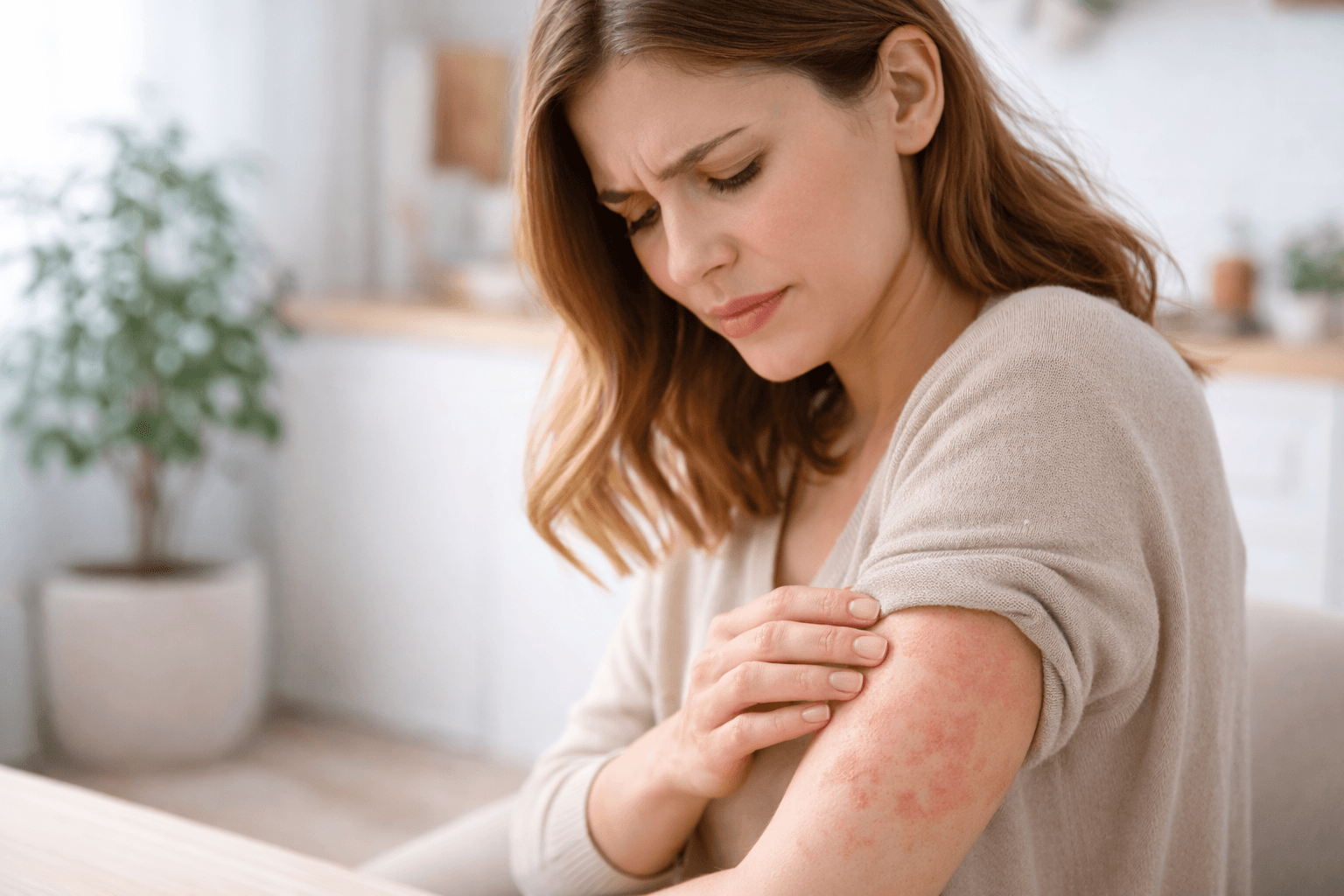
What Triggers Idiopathic Angioedema?
About our service: The Allergy Clinic is a private, nurse-led service in London offering specific IgE blood testing only. We do not provide skin-prick testing, food challenges, immunotherapy or prescribing services. Results are explained in plain English to support discussions with your GP or specialist.
Idiopathic angioedema is a condition characterised by sudden swelling of deeper skin layers and mucous membranes, particularly around the face, lips, eyelids, and throat, where the underlying cause remains unknown despite thorough investigation. This unpredictable condition affects approximately 1 in 10,000 people in the UK.
Understanding potential triggers for idiopathic angioedema can help individuals better manage their condition and identify patterns that may contribute to episodes, even when the root cause cannot be definitively established.
Understanding Idiopathic Angioedema
Angioedema occurs when fluid accumulates in the deeper layers of skin tissue, causing characteristic swelling. When healthcare professionals cannot identify a specific underlying cause after comprehensive evaluation, the condition is classified as idiopathic.
Unlike allergic angioedema, which has clear triggers such as specific foods or medications, idiopathic angioedema presents unique challenges because episodes may appear seemingly random. However, research suggests various factors may influence the frequency and severity of symptoms.
Practical Insight: Even when no clear cause can be identified, keeping a detailed symptom diary may help identify subtle patterns or potential contributing factors.
Common Trigger Categories
Environmental Factors
Environmental influences can play a significant role in triggering idiopathic angioedema episodes:
- Temperature changes: Sudden exposure to cold or heat
- Humidity fluctuations: Particularly during seasonal transitions
- Air quality: Pollution levels common in London and other urban areas
- Barometric pressure: Weather system changes
Lifestyle Triggers
Several lifestyle factors may contribute to episode frequency:
- Stress levels: Both acute and chronic psychological stress
- Sleep patterns: Disrupted sleep or sleep deprivation
- Physical activity: Intense exercise or sudden exertion
- Alcohol consumption: Particularly wine and spirits
Dietary Considerations
While not allergic reactions, certain foods may act as non-specific triggers:
- Histamine-rich foods: Aged cheeses, fermented products, processed meats
- Food additives: Artificial colours, preservatives, flavour enhancers
- Spicy foods: May trigger episodes in sensitive individuals
- Caffeine: High intake or sudden changes in consumption
| Trigger Category | Common Examples | Frequency of Association |
|---|---|---|
| Environmental | Temperature changes, air quality | Moderate to High |
| Lifestyle | Stress, sleep disruption | High |
| Dietary | Histamine-rich foods, additives | Variable |
| Physical | Exercise, pressure, friction | Low to Moderate |
Hormonal and Medical Factors
Hormonal Influences
Hormonal fluctuations may contribute to episode patterns:
- Menstrual cycle: Some women notice episodes correlate with specific cycle phases
- Pregnancy: Hormonal changes may affect symptom frequency
- Thyroid function: Both overactive and underactive thyroid conditions
- Autoimmune activity: Underlying autoimmune processes
Medical Considerations
Certain medical factors may influence angioedema episodes:
- Infections: Viral or bacterial infections may trigger episodes
- Medications: Even when not directly allergic, some medications may contribute
- Chronic conditions: Autoimmune disorders or chronic inflammatory conditions
- Dental procedures: May occasionally precede episodes
Practical Insight: Regular health screening can help identify underlying conditions that might contribute to episode frequency, even in idiopathic cases.
Who Should Consider Angioedema Testing?
Individuals experiencing recurrent swelling episodes should consider comprehensive evaluation through appropriate healthcare services. Testing may be particularly relevant for those experiencing:
- Frequent episodes without obvious allergic triggers
- Swelling affecting the throat or airways
- Episodes interfering with daily activities
- Uncertainty about whether reactions are allergic or non-allergic
Comprehensive allergy screening can help differentiate between allergic and idiopathic angioedema, which is crucial for understanding potential triggers and management approaches. The histamine-releasing urticaria test is also commonly considered where chronic spontaneous angioedema and urticaria coexist.
Testing and Evaluation Frequency
For individuals with suspected idiopathic angioedema, testing frequency depends on several factors:
Initial Assessment:
- Comprehensive allergy panel to rule out specific allergens
- Complement system evaluation (C1 esterase inhibitor levels)
- Autoimmune markers to identify underlying conditions
Follow-up Testing:
- Annual review if symptoms are well-controlled
- More frequent testing if symptoms worsen or patterns change
- Additional testing when new potential triggers are suspected
London residents have access to both NHS and private testing options, with private screening often offering more comprehensive panels and faster results for those seeking prompt evaluation.
Understanding Test Results
Angioedema-related test results can provide valuable insights:
Allergy Testing Results
- Negative results: May confirm idiopathic nature but don't rule out non-allergic triggers
- Positive specific IgE: Indicates allergic triggers rather than idiopathic angioedema
- Total IgE levels: May suggest underlying allergic tendency
Complement Testing
- C1 esterase inhibitor deficiency: Indicates hereditary angioedema rather than idiopathic
- Normal complement levels: Supports idiopathic classification
- C4 levels: May help differentiate between different angioedema types
Inflammatory Markers
- CRP and ESR: May indicate underlying inflammatory processes
- Autoimmune markers: Can reveal conditions contributing to episodes
- Thyroid function: Important as thyroid disorders may influence symptoms
Practical Insight: Understanding test results helps distinguish between truly idiopathic cases and those with subtle underlying causes that may be manageable.
Managing Potential Triggers
While the underlying cause remains unknown, individuals can take steps to minimise potential triggers:
Environmental Management
- Maintain stable indoor temperatures when possible
- Use air purifiers in polluted urban environments like London
- Monitor weather changes and prepare accordingly
Lifestyle Modifications
- Implement stress management techniques
- Maintain regular sleep patterns
- Keep a detailed symptom and trigger diary
Dietary Awareness
- Consider reducing histamine-rich foods during active periods
- Monitor responses to food additives
- Maintain adequate hydration
London Healthcare Context
London residents with idiopathic angioedema have access to specialised allergy services through both NHS and private providers. NHS services typically focus on ruling out serious underlying causes, while private clinics may offer more comprehensive screening panels and faster access to testing.
The city's high pollution levels and diverse food scene can present unique challenges for individuals with idiopathic angioedema, making comprehensive evaluation particularly valuable for London-based patients.
When to Seek Medical Attention
Individuals should seek appropriate medical advice if they experience:
- Swelling affecting breathing or swallowing
- Rapidly worsening episodes
- New symptoms accompanying the swelling
- Increasing frequency of episodes
If you experience breathing difficulties or severe throat swelling, call 999 or go to A&E immediately.
Comparison: Allergic vs Idiopathic Angioedema
| Aspect | Allergic Angioedema | Idiopathic Angioedema |
|---|---|---|
| Trigger Identification | Clear, specific triggers | Unknown or unclear triggers |
| Testing Results | Positive specific IgE | Negative specific allergy tests |
| Predictability | Often predictable | Unpredictable episodes |
| Management | Avoidance of known triggers | General trigger reduction |
Frequently Asked Questions
What exactly causes idiopathic angioedema?
By definition, the specific cause of idiopathic angioedema cannot be identified. However, various factors including stress, environmental changes, hormonal fluctuations, and certain foods may contribute to triggering episodes in susceptible individuals.
How is idiopathic angioedema different from food allergies?
Unlike food allergies, idiopathic angioedema cannot be traced to specific allergens. Allergy testing typically shows negative results for common allergens, and episodes may occur without any apparent dietary triggers.
Can stress really trigger idiopathic angioedema episodes?
Yes, psychological stress is frequently reported as a potential trigger. Stress may affect immune system function and inflammatory processes, potentially contributing to episode development in susceptible individuals.
How often should I have allergy testing if I have idiopathic angioedema?
Initial comprehensive testing helps confirm the idiopathic nature of your condition. Follow-up testing may be recommended annually or if symptom patterns change significantly, but this should be discussed with appropriate healthcare services.
Are there specific foods I should avoid with idiopathic angioedema?
While not allergic reactions, some individuals find that histamine-rich foods, artificial additives, or very spicy foods may trigger episodes. Keeping a food diary can help identify personal trigger patterns.
Can idiopathic angioedema develop into something more serious?
Idiopathic angioedema itself is not progressive, but episodes affecting the throat or airways require immediate medical attention. Regular monitoring helps ensure no underlying conditions develop over time.
Is idiopathic angioedema more common in certain age groups?
Idiopathic angioedema can affect any age group, but it's most commonly diagnosed in adults between 30-50 years old. Women may be slightly more affected than men.
Can weather changes trigger idiopathic angioedema?
Many individuals report that sudden temperature changes, humidity fluctuations, or barometric pressure changes associated with weather systems may precede episodes, though the exact mechanism remains unclear.
Should I avoid exercise if I have idiopathic angioedema?
Regular moderate exercise is generally beneficial, but intense sudden exertion may trigger episodes in some individuals. Gradual warm-up and cool-down periods may help reduce exercise-related triggers.
How long do idiopathic angioedema episodes typically last?
Episodes usually resolve within 24-72 hours without intervention, though this can vary significantly between individuals. Episodes lasting longer or involving breathing difficulties require medical evaluation.
If you're experiencing unexplained swelling episodes, comprehensive allergy screening can help determine whether your symptoms have identifiable triggers or may be idiopathic in nature. Understanding your individual trigger patterns, even when the underlying cause remains unclear, can help you make informed decisions about managing your condition and maintaining your wellbeing. Prices may vary and a full treatment plan with costs will be provided at consultation.
References
- NHS (2024). Angioedema. https://www.nhs.uk/conditions/angioedema/
- BSACI (2023). Guidelines for the management of angioedema and urticaria. British Society for Allergy and Clinical Immunology.
- Allergy UK (2024). Angioedema — understanding triggers and management. https://www.allergyuk.org/
- HAE UK (2024). Hereditary and idiopathic angioedema. https://www.haeuk.org/
- NICE CKS (2024). Urticaria and angioedema. https://cks.nice.org.uk/topics/urticaria/