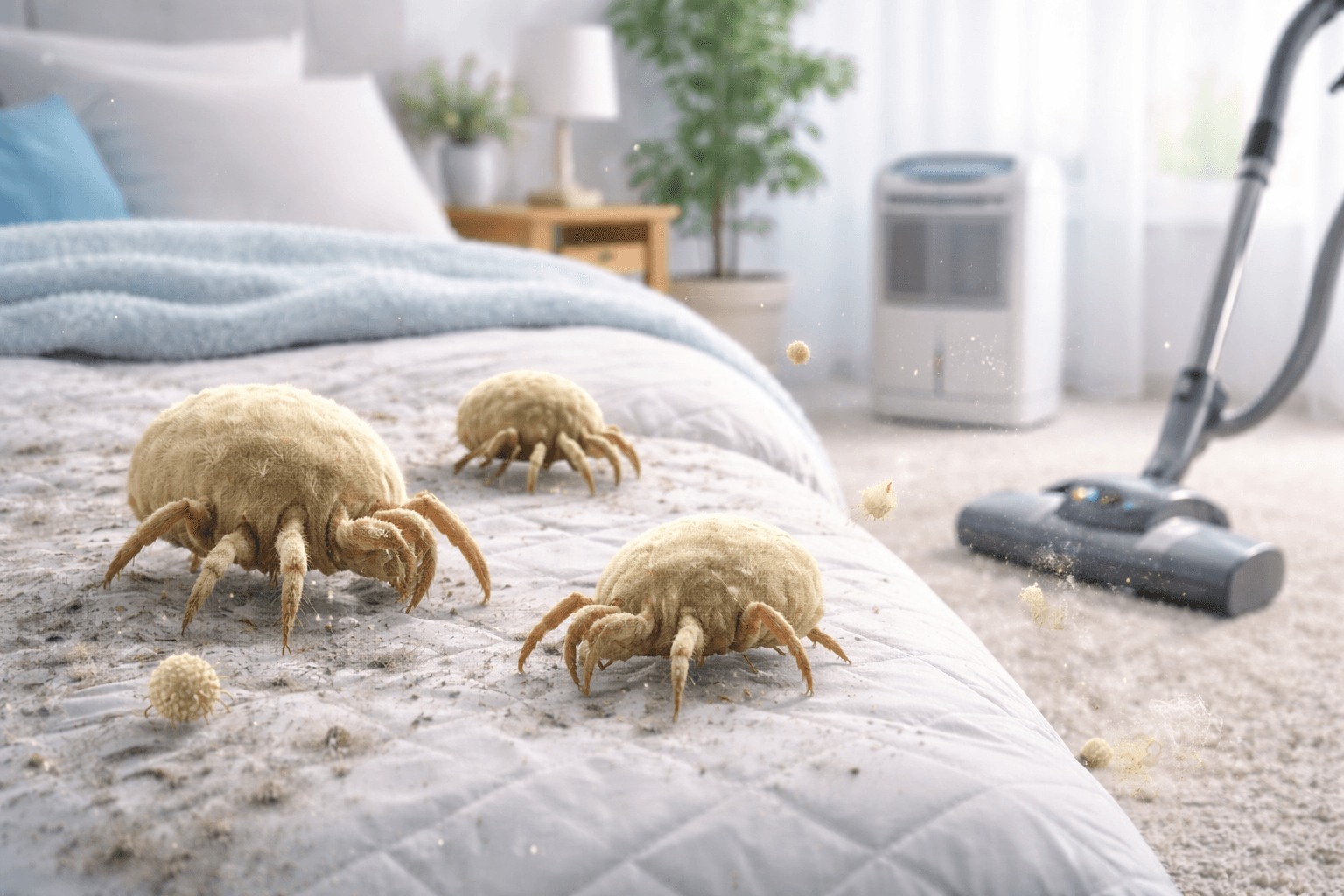
Microclimates in Modern Homes: How Underfloor Heating Impacts Dust Mite Lifespans and Spore Growth
Modern UK homes are becoming increasingly energy-efficient - better insulated, better sealed, and more likely to feature underfloor heating (UFH) than ever before. While this shift brings genuine comfort and lower energy bills, it also creates something less discussed: distinct indoor microclimates that may significantly affect the behaviour of biological allergens, particularly house dust mites and mould spores.
If you live with a dust mite allergy, unexplained respiratory symptoms, or persistent skin reactions, understanding how your home's heating system interacts with its biological environment could be an important piece of the puzzle. This article explores the science behind indoor microclimates, how underfloor heating may alter allergen dynamics, and why proactive allergy testing may help you make sense of your symptoms.
What Is an Indoor Microclimate - and Why Does It Matter for Allergen Load?
An indoor microclimate is a localised zone within a building where temperature, humidity, and airflow differ from the surrounding environment. These zones can significantly influence the survival, reproduction, and dispersal of biological allergens such as house dust mites and mould spores.
Standard central heating systems distribute warmth unevenly - warm air rises, cooler air pools near floors, and humidity fluctuates throughout the day. Underfloor heating, by contrast, radiates heat gently and consistently from the ground upward, fundamentally changing how air circulates and where moisture accumulates.
This matters because house dust mites and mould spores are both exquisitely sensitive to temperature and relative humidity. Small shifts in either variable - such as those created by a UFH system - can meaningfully alter how long dust mites survive, how rapidly they reproduce, and how aggressively mould colonises surfaces.
Dust Mites and Temperature: What Does the Science Tell Us?
House dust mites (Dermatophagoides pteronyssinus and Dermatophagoides farinae) are microscopic arachnids that thrive in warm, humid conditions. They feed primarily on shed human skin cells and are among the most common indoor allergen sources worldwide.
Optimal Conditions for Dust Mite Survival
| Condition | Dust Mite Preference | Effect on Lifespan / Reproduction |
|---|---|---|
| Temperature | 20-25C | Peak reproductive activity; longer lifespan |
| Relative Humidity | 70-80% | Maximum egg production and survival |
| Temperature below 16C | Unfavourable | Mite activity slows significantly |
| Relative Humidity below 50% | Suppressive | Mites desiccate and die more quickly |
| Underfloor heating (floor zone) | Often 18-24C | May maintain near-optimal floor-level conditions year-round |
Conventional radiator-based heating tends to dry out indoor air during winter months - inadvertently suppressing dust mite populations. Underfloor heating, however, maintains a gentler, more consistent warmth near the floor. When combined with the reduced ventilation typical of well-insulated modern homes, this can sustain near-optimal humidity levels in carpets, rugs, and soft furnishings at floor level - precisely where dust mites congregate.
Practical Insight: UFH-equipped homes may experience higher baseline dust mite allergen concentrations compared to homes with traditional radiator heating, particularly in carpeted rooms or rooms with upholstered furniture resting on warmed floors.
How Underfloor Heating May Extend Dust Mite Lifespans
Without UFH, UK homes experience a natural thermal cycle: floors are cooler in winter, which limits dust mite activity. With UFH, floors maintain a consistent temperature throughout the colder months, potentially removing the seasonal suppression effect that would otherwise reduce mite populations.
Key mechanisms include:
- Year-round floor warmth maintaining temperatures within the dust mite survival range even in winter
- Reduced cold-floor desiccation that would otherwise dehydrate mite populations in carpets and underlay
- Consistent warmth beneath furniture - sofas, beds, and rugs sitting on UFH floors may become sustained allergen reservoirs
- Stratified humidity gradients where moisture from daily activities (cooking, bathing, breathing) is drawn down toward the warm floor zone rather than dissipating upward
Mould Spores: A Separate but Related Concern
Mould spores represent a distinct but parallel concern in UFH homes. Unlike dust mites, mould thrives where condensation occurs - and while UFH warms floors directly, it can create temperature differentials between heated floors and cooler walls, window frames, or ceiling edges.
These differential surfaces can become condensation points, particularly in bathrooms, kitchens, and poorly ventilated bedrooms. Mould genera such as Aspergillus, Cladosporium, and Alternaria can colonise these areas and release airborne spores that act as potent respiratory allergens.
Mould Spore vs Dust Mite: A Comparison of Indoor Allergen Profiles
| Feature | House Dust Mite | Mould Spores |
|---|---|---|
| Primary trigger | Warm, humid floor zones | Cool, damp surfaces and condensation zones |
| Seasonality | Year-round in UFH homes | Often peak in autumn; perennial in poorly ventilated homes |
| Main affected symptoms | Rhinitis, eczema, asthma | Rhinitis, cough, asthma exacerbation |
| Testing method | Specific IgE blood testing | Specific IgE blood testing |
| UFH impact | May increase floor-level burden | May increase condensation at wall/ceiling boundaries |
Practical Insight: If you experience respiratory symptoms that seem worse at home than outdoors, or that persist despite seasonal changes, both dust mite and mould spore sensitisation may be worth exploring through appropriate allergy testing.
Who Might Benefit from Allergy Testing in This Context?
You may find it useful to consider allergy testing if you:
- Live in a modern, well-insulated home with underfloor heating and notice persistent nasal congestion, sneezing, or itchy eyes
- Experience year-round symptoms that don't clearly map to a pollen season
- Notice symptom flares at home, particularly in bedrooms, living rooms, or areas with carpeting over UFH systems
- Have young children in households with UFH, where floor-level exposure to allergens may be especially high
- Are considering home renovations and want a baseline allergen sensitivity profile before installing UFH
- Already have a known respiratory condition (such as asthma) that seems to fluctuate with home environment changes
This is particularly relevant in London and other major UK cities, where modern new-build properties and converted flats with UFH systems are increasingly common - and where residents may be spending more time indoors in highly insulated environments.
For more information on the range of allergy investigations available, you may find it helpful to explore our allergy testing services.
What Does Allergy Testing Involve?
At a nurse-led allergy testing clinic, testing for indoor allergens such as house dust mites and mould spores typically involves a specific IgE (immunoglobulin E) blood test. This measures whether your immune system has produced antibodies in response to particular allergen proteins.
Unlike skin prick testing, specific IgE blood testing:
- Requires no allergen exposure on the day
- Can be carried out regardless of current antihistamine use (in many cases)
- Provides quantified results across a wide panel of common indoor, outdoor, and food allergens
- Allows clinicians to identify polysensitisation - reactions to multiple allergens simultaneously
Results are reported and explained clearly, helping you understand whether your immune profile suggests sensitisation to dust mites, mould species, or other indoor environmental triggers.
To understand more about how home exposure can be reduced in practical terms, see our guide on reducing dust mite allergens in bedding.
Understanding Your Results: What They May Indicate
A positive specific IgE result for house dust mite or mould spore allergens may indicate that your immune system has developed a sensitisation response to that allergen. It is important to understand that:
- Sensitisation does not automatically confirm that the allergen is causing your current symptoms
- Results should always be reviewed in the context of your symptom history and home environment
- A nurse-led clinic can report and explain findings clearly, helping you understand what next steps may be appropriate
- Borderline or low-level results sometimes highlight low-grade sensitisation that may still be clinically relevant
Practical considerations following testing might include reviewing home ventilation strategies, flooring choices, or bedding habits - all of which can influence allergen burden without requiring any medical intervention. For room-level airflow planning, our allergen-free bedroom ventilation guide is a useful next read.
For context on how different allergic conditions present and how testing supports identification, you may find our resources on allergy symptoms and testing informative.
Practical Steps to Reduce Indoor Allergen Burden in UFH Homes
While allergy testing informs your understanding of sensitisation, there are several evidence-supported environmental strategies that may help reduce allergen exposure in underfloor-heated homes:
- Increase ventilation - open windows regularly, use extractor fans, and consider mechanical heat recovery ventilation (MHRV) systems
- Choose hard flooring over carpet in rooms above UFH where possible, or use washable rugs
- Wash bedding weekly at 60C to reduce dust mite populations in mattresses and pillows
- Use allergen-impermeable mattress and pillow covers as a barrier measure
- Monitor indoor humidity with a hygrometer; aim to maintain below 50% relative humidity where possible
- Address condensation promptly on windows, walls, and ceilings to discourage mould growth
- Vacuum regularly with HEPA-filter equipped machines to reduce floor-level allergen reservoirs
Local London Relevance: Why This Matters in Urban UK Homes
London's housing stock includes a disproportionately high number of converted flats, new-build apartments, and renovated period properties - many of which now feature underfloor heating as a standard finish. Combined with urban air quality pressures and higher rates of atopic conditions in densely populated areas, London residents may face a compounded indoor allergen burden that is worth investigating proactively; this is particularly relevant when damp zones are present, as outlined in our mould spore reduction guide for damp bathrooms.
The NHS provides excellent emergency and chronic care for allergic conditions, but routine allergy testing and detailed sensitisation profiling may not always be readily available through GP referral pathways alone. A private nurse-led allergy testing clinic can offer accessible, timely, and detailed IgE testing - helping individuals build a clearer picture of their allergen profile without delay.
You can explore the full range of available tests through our service pages.
Frequently Asked Questions
Can underfloor heating make dust mite allergy symptoms worse?
Underfloor heating can create warm, consistent floor-level conditions that may sustain dust mite populations year-round. If you have a known dust mite allergy or experience perennial allergy symptoms at home, UFH systems may be a contributing environmental factor worth investigating through testing.
How do I know if my symptoms are caused by dust mites or mould spores?
Specific IgE blood testing can help identify whether your immune system has responded to dust mite allergens, mould species, or both. A nurse-led allergy clinic can carry out and report this testing to help you understand your sensitisation profile.
Does underfloor heating directly cause mould growth?
UFH itself does not directly cause mould. However, it can create temperature differentials within the home - warm floors, cooler walls - that may lead to localised condensation on cooler surfaces, which in turn can encourage mould colonisation if ventilation is insufficient.
What is specific IgE blood testing and how is it done?
Specific IgE blood testing measures the level of allergen-specific antibodies in your bloodstream. A small blood sample is taken by a trained nurse and sent to a laboratory. Results indicate whether sensitisation to particular allergens - including dust mites and mould spores - may be present.
Are dust mite allergy symptoms different from hay fever?
They can appear similar - both may cause sneezing, nasal congestion, and itchy eyes. However, dust mite allergy symptoms are typically perennial (year-round) rather than seasonal, and may worsen indoors or in the morning after a night in a dust mite-rich bedroom environment.
Can children be tested for dust mite and mould spore allergy?
Yes. Specific IgE blood testing can be carried out in children as well as adults. If your child experiences persistent nasal symptoms, eczema flares, or respiratory symptoms at home, testing may provide useful information about potential sensitivities.
Should I test for both dust mites and mould spores together?
Many people opt for a panel test covering multiple indoor allergens simultaneously. This can provide a broader picture of sensitisation and may help identify polysensitisation - where more than one allergen is contributing to symptoms.
How often should allergy testing be repeated?
There is no fixed universal frequency for allergy retesting. For adults with stable, identified sensitivities, periodic retesting may be considered if symptoms change, a new home environment is introduced, or if you wish to reassess your allergen profile. A nurse-led clinic can advise on appropriate intervals based on your individual history.
Is a dust mite allergy test the same as a home test kit?
Home dust mite test kits typically measure the allergen burden in your environment (e.g., in mattress dust). A specific IgE blood test, by contrast, measures your immune response to dust mite proteins - these are different types of investigation with different purposes.
Take a Proactive Step Towards Understanding Your Indoor Allergies
If you live in a modern home with underfloor heating and experience symptoms that may suggest a dust mite allergy or mould spore sensitivity, allergy testing can provide a clearer, evidence-informed picture of your immune profile. Understanding your sensitisation patterns is a meaningful first step toward making informed decisions about your home environment and wellbeing.
Explore the testing options available through our service pages or visit our blog for further guidance on indoor allergens, testing, and home environment health.