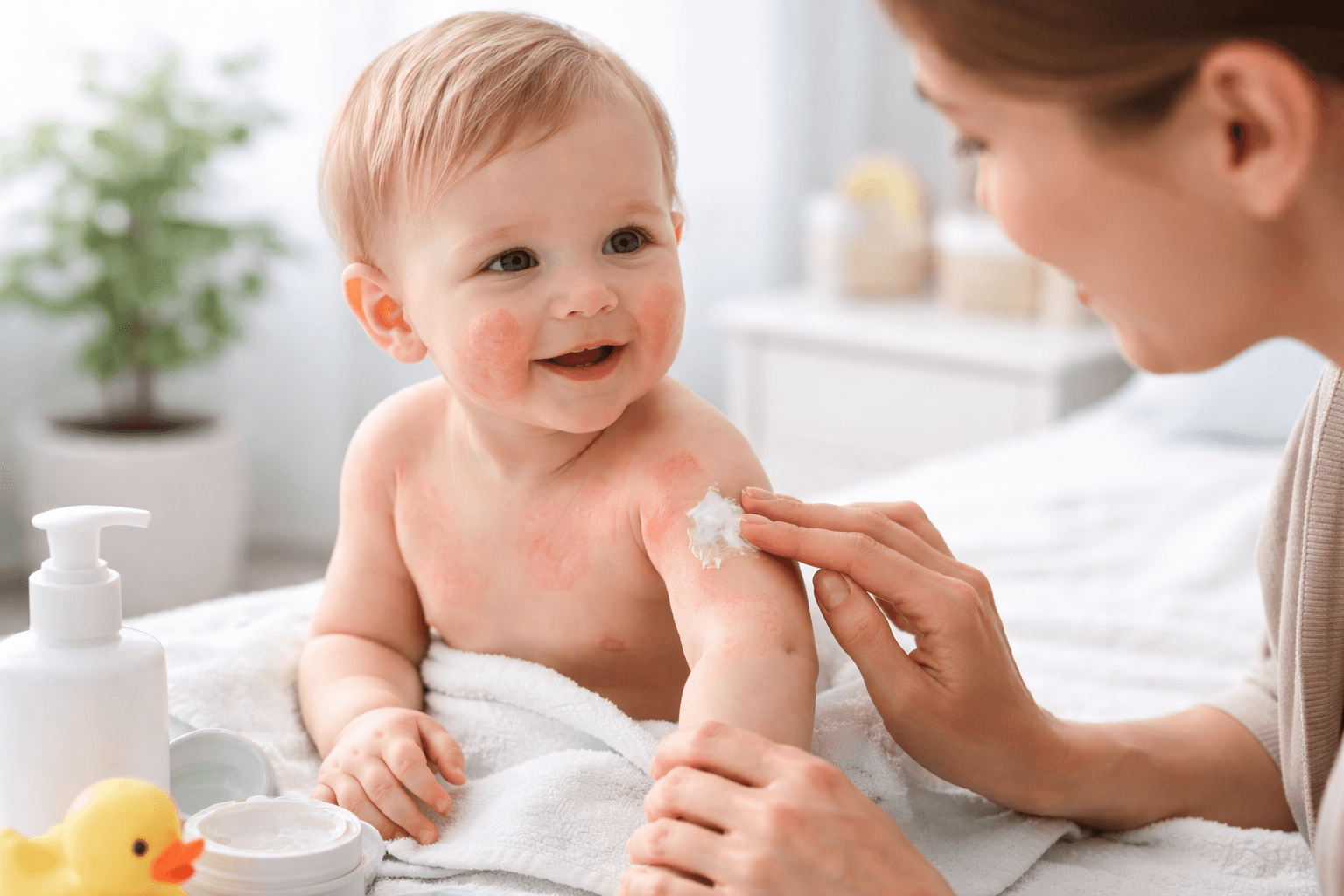
Can Baby Eczema Be Cured by Changing the Mother's Diet?
Changing a breastfeeding mother's diet can reduce baby eczema symptoms when specific food allergens — most commonly cow's milk proteins — are involved, but it rarely cures the condition outright. Allergy testing offers the most targeted route to identifying genuine dietary triggers rather than resorting to unnecessary blanket elimination.
Baby eczema, medically known as atopic dermatitis, affects up to 20% of infants in the UK. Many breastfeeding mothers wonder whether adjusting their diet could help reduce their baby's eczema symptoms. While maternal dietary changes may influence some cases of infant eczema, particularly when food allergies are involved, complete "curing" through diet alone is rarely straightforward.
The relationship between a mother's diet during breastfeeding and baby eczema is complex and varies significantly between individuals. Current research suggests that specific dietary modifications may help some infants, but comprehensive allergy testing may provide clearer guidance for understanding potential triggers.
Understanding Baby Eczema and Its Triggers
What Causes Baby Eczema?
Baby eczema typically results from multiple factors working together:
- Genetic predisposition: Family history of allergies, asthma, or eczema
- Skin barrier dysfunction: Compromised skin protection leading to moisture loss
- Environmental triggers: Harsh soaps, fabrics, temperature changes
- Immune system responses: Including reactions to certain proteins
- Food sensitivities: Which may be transmitted through breast milk
How Maternal Diet May Influence Baby Eczema
When a breastfeeding mother consumes certain foods, proteins can pass through breast milk to the baby. For infants with specific sensitivities, these proteins may trigger inflammatory responses that worsen eczema symptoms.
Practical Insight: Not all baby eczema is food-related. Many cases improve with proper skincare routines and environmental modifications, regardless of dietary changes.
Common Dietary Triggers in Breast Milk
The "Big 8" Allergens
Research identifies eight major food allergens that most commonly affect infants through breast milk:
| Food Group | Common Sources | Potential Impact |
|---|---|---|
| Cow's Milk | Dairy products, cheese, yoghurt | Most common trigger in infant eczema |
| Eggs | Whole eggs, baked goods | Can cause delayed reactions |
| Nuts | Peanuts, tree nuts | May trigger immediate or delayed responses |
| Wheat | Bread, pasta, cereals | Less common but significant when present |
| Soy | Tofu, soy milk, processed foods | Often secondary to milk protein issues |
| Fish/Shellfish | All varieties | More common in coastal populations |
| Sesame | Seeds, tahini, oils | Increasingly recognised trigger |
Lesser-Known Dietary Influences
Some mothers report improvements when reducing:
- Citrus fruits: May increase skin sensitivity in some babies
- Tomatoes: High histamine content may worsen inflammation
- Chocolate: Contains multiple potential triggers
- Caffeine: May affect sleep patterns, indirectly worsening eczema
The Role of Allergy Testing in Understanding Baby Eczema
When to Consider Allergy Testing
Allergy testing becomes particularly valuable when:
- Baby eczema persists despite standard skincare measures
- Symptoms worsen after feeding or coincide with maternal diet changes
- Family history suggests strong allergic tendencies
- Multiple symptoms occur alongside eczema (digestive issues, sleep disruption)
Types of Testing Available
IgE food allergy testing can identify immediate allergic reactions to specific foods that may be affecting your baby through breast milk. This blood test measures antibodies that indicate allergic responses to various food proteins.
Comprehensive Allergy Panels help identify multiple potential triggers simultaneously, providing a broader understanding of your baby's sensitivities.
Practical Insight: Testing both mother and baby (where age-appropriate) can provide the most comprehensive picture of potential dietary triggers affecting infant eczema.
Evidence-Based Approaches to Maternal Diet Modification
The Elimination Diet Method
Healthcare professionals often recommend systematic elimination diets for breastfeeding mothers:
- Identify suspect foods based on symptom timing
- Remove potential triggers for 2-4 weeks
- Monitor baby's eczema for improvements
- Gradually reintroduce foods one at a time
- Document reactions to identify specific triggers
What the Research Shows
Studies on maternal diet and baby eczema reveal:
- A significant proportion of infants with moderate to severe eczema may have food-related triggers, though estimates vary between studies
- Cow's milk elimination is the most widely studied dietary intervention when food sensitivity is suspected in breastfeeding infants
- Complete dietary restriction without testing may lead to nutritional deficiencies
- Individual variation is significant – what works for one baby may not work for another
Nutritional Considerations for Breastfeeding Mothers
Maintaining Balanced Nutrition
When modifying diet for baby's eczema, mothers must ensure adequate nutrition:
- Calcium alternatives: If avoiding dairy, include leafy greens, fortified plant milks
- Protein sources: Ensure adequate intake from permitted foods
- Vitamin supplementation: May be necessary with restricted diets
- Professional guidance: Nutritional counselling helps maintain maternal health
London-Based Support Services
Many London healthcare providers offer specialised support for breastfeeding mothers managing babies with eczema. Private allergy testing may provide timely, comprehensive results to guide dietary decisions effectively.
Practical Insight: Restrictive diets should ideally be time-limited and monitored by healthcare professionals to prevent nutritional deficiencies in both mother and baby.
What Eczema Improvements to Expect
Timeline for Dietary Changes
When food triggers are genuinely involved:
- Initial improvements: May be visible within 1-2 weeks
- Significant changes: Often occur within 4-6 weeks
- Complete resolution: Rare from dietary changes alone
- Gradual progress: More common than dramatic improvements
Realistic Expectations
It's important to understand that:
- "Curing" eczema through diet alone is uncommon
- Symptom reduction is a more realistic goal
- Multi-faceted approach typically yields best results
- Long-term management often involves various strategies
When Dietary Changes Aren't Enough
Additional Management Strategies
Even with optimal dietary modifications, baby eczema may require:
- Gentle skincare routines: Appropriate moisturisers and cleansers
- Environmental modifications: Humidity control, fabric choices
- Professional medical guidance: For persistent or severe symptoms
- Ongoing monitoring: To adjust approaches as baby grows
Seeking Appropriate Healthcare Support
Consider professional healthcare advice when:
- Eczema significantly impacts baby's sleep or comfort
- Symptoms worsen despite dietary changes
- Multiple family members have allergic conditions
- You're considering major dietary restrictions
Testing Options for London Families
Many families in London find that comprehensive allergy testing provides clearer direction than trial-and-error dietary changes. Allergy blood testing for children can identify specific triggers quickly, allowing for more targeted dietary modifications.
Understanding your baby's specific sensitivities through testing may prevent unnecessary dietary restrictions while ensuring that genuine triggers are addressed appropriately.
Practical Insight: Combining professional allergy testing with gradual dietary modifications may provide an effective and sustainable approach to managing food-related baby eczema.
Frequently Asked Questions
How long should I try eliminating foods from my diet before seeing results in my baby's eczema?
Most healthcare professionals recommend allowing 2-4 weeks for each elimination trial. If your baby has a genuine food sensitivity, improvements typically begin within 1-2 weeks and become more noticeable by 4 weeks.
Can I eliminate all common allergens at once to speed up the process?
While tempting, eliminating multiple food groups simultaneously can lead to nutritional deficiencies and makes it difficult to identify specific triggers. A systematic, one-by-one approach is generally more effective and safer.
Will my baby outgrow eczema triggered by foods in my breast milk?
Many infants do outgrow food-related eczema as their digestive and immune systems mature. However, some may develop direct food allergies later in childhood, making early identification through testing valuable.
How can I tell if my baby's eczema is food-related or environmental?
Food-related eczema often coincides with feeding times or specific maternal dietary intake. Environmental eczema may worsen with weather changes, new products, or seasonal factors. Allergy testing can help distinguish between these triggers.
Is it safe to restrict my diet while breastfeeding?
Minor dietary modifications are generally safe, but extensive restrictions should be supervised by healthcare professionals. Maintaining adequate nutrition is crucial for both your health and your baby's development.
Can baby eczema be completely cured by changing my diet?
Complete "curing" through dietary changes alone is uncommon. While some babies experience significant improvement when specific food triggers are eliminated, eczema typically requires ongoing management using multiple approaches.
Should I stop breastfeeding if dietary changes don't help my baby's eczema?
Breastfeeding provides numerous benefits beyond eczema management. Most healthcare professionals recommend continuing breastfeeding while exploring other management strategies alongside any necessary dietary modifications.
How do I know which foods to eliminate first?
Cow's milk proteins are the most common trigger in food-related infant eczema. However, comprehensive allergy testing can identify your baby's specific sensitivities, allowing for more targeted elimination approaches.
Can I reintroduce eliminated foods later?
Yes, foods eliminated during eczema management can often be gradually reintroduced as your baby's digestive system matures. This should be done systematically and preferably with professional guidance.
What's the difference between food allergies and food sensitivities in babies?
Food allergies typically cause immediate, obvious reactions and can be identified through IgE testing. Food sensitivities may cause delayed reactions like worsening eczema and can be more challenging to identify without systematic elimination and testing approaches.
Finding Clarity for Your Baby's Skin
Managing baby eczema is rarely a single-step process, but understanding whether food allergens are contributing makes the path forward significantly clearer. Maternal dietary changes can play a meaningful role when specific triggers — particularly cow's milk proteins — are identified, but blanket elimination without guidance risks nutritional gaps for both mother and baby while leaving the actual trigger unaddressed.
The most practical starting point is gathering objective information. IgE allergy blood testing can confirm or rule out food-driven sensitisation quickly, sparing families weeks of uncertain trial-and-error elimination. When combined with appropriate skincare and environmental adjustments, targeted dietary modification based on test results offers the best foundation for reducing your baby's eczema burden over time.
If your baby's eczema persists despite your best efforts, consider speaking to the team about which allergy panel would give you the clearest picture of what may be driving their symptoms.